
Iran reviewing latest US response as Trump suggests he can wait

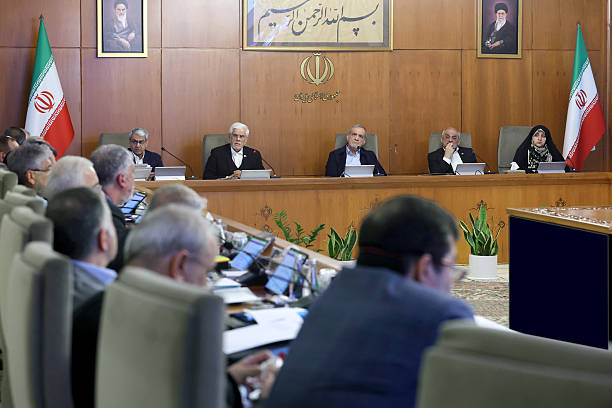
Iran said on Thursday it was reviewing Washington’s latest position on ending the war after United States President Donald Trump warned that military action could resume if Tehran failed to reach an agreement with Washington, Reuters reported.
“We have received U.S. views and are reviewing them,” Iranian Foreign Ministry spokesperson Esmaeil Baghaei told the state-run Nour News agency.
Pakistan, which hosted peace talks last month and has served as an intermediary between both sides, remains involved in ongoing diplomatic contacts, Baghaei added. Pakistan’s interior minister visited Tehran on Wednesday as mediation efforts continued.
The developments come six weeks after a fragile ceasefire took effect, with negotiations showing limited progress amid growing concerns over global energy supplies and rising oil prices.
Trump, speaking to reporters at Joint Base Andrews, said the United States was prepared to act swiftly if talks failed.
“Believe me, if we don’t get the right answers, it goes very quickly. We’re all ready to go,” he said.
Asked how long Washington would wait for a response from Tehran, Trump replied: “It could be a few days, but it could go very quickly.”
Earlier on Thursday, Trump reiterated that his administration remained determined to prevent Iran from acquiring nuclear weapons.
“We’re in the final stages of Iran. We’ll see what happens. Either have a deal, or we’re going to do some things that are a little bit nasty, but hopefully that won’t happen,” he said.
“Ideally, I’d like to see few people killed, as opposed to a lot. We can do it either way.”
Iran’s Revolutionary Guards responded by warning against any renewed military action.
“If aggression against Iran is repeated, the promised regional war will extend beyond the region this time,” the organisation said in a statement.
Tehran submitted its latest proposal to Washington earlier this week. Iranian officials indicated that the offer included demands previously rejected by the United States, including control over the Strait of Hormuz, compensation for war-related damage, the lifting of sanctions, the release of frozen assets, and the withdrawal of US troops from the region.
The Strait of Hormuz, through which roughly one-fifth of global oil and liquefied natural gas shipments passed before the conflict, has remained heavily disrupted since the outbreak of war.
On Wednesday, Iran published a map designating a “controlled maritime zone” in the strait and stated that vessels would require authorisation to transit the area.
Tehran said the passage could reopen to countries willing to comply with its conditions, potentially including payment of access fees, a proposal Washington has rejected.
According to shipping data, two Chinese supertankers carrying approximately four million barrels of oil exited the strait on Wednesday, while a South Korean tanker transporting two million barrels of Kuwaiti crude also passed through in coordination with Iranian authorities.
Shipping monitor Lloyd’s List reported that at least 54 vessels transited the strait last week, nearly double the number recorded the previous week, although still below pre-war levels of between 125 and 140 daily passages.
The conflict has resulted in heavy casualties across the region.
US and Israeli air strikes reportedly killed thousands of people in Iran before the ceasefire, while Israeli military operations in Lebanon targeting the Iran-backed Hezbollah group displaced hundreds of thousands of residents.
Iranian missile and drone attacks on Israel and neighbouring Gulf states have also killed dozens of people.
Trump and Israeli Prime Minister Benjamin Netanyahu have said their objectives include curbing Iran’s support for regional militias, dismantling its nuclear programme and weakening its missile capabilities.
Despite the military campaign, Iran is believed to have retained significant stockpiles of highly enriched uranium as well as the capacity to project influence through missiles, drones, and allied armed groups across the region.
