
US Defence Secretary Says Slain ISIS Deputy Commander Was Responsible for Attacks on Christians in Nigeria

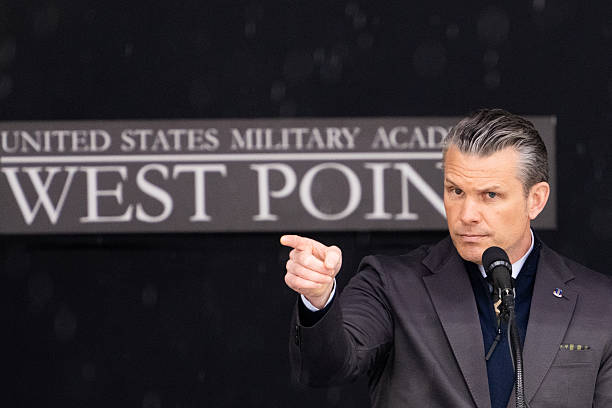
Pete Hegseth, the United States Secretary of Defence, has said that Abu-Bilal Al-Minuki, the slain second-in-command of the Islamic State (ISIS), was responsible for attacks targeting Christians in Nigeria.
Al-Minuki was killed on 15 May during a joint military operation conducted by United States and Nigerian forces against his compound in the Lake Chad Basin.
Speaking during a cabinet meeting at the White House on Wednesday, Hegseth said the operation formed part of efforts by the administration of President Donald Trump to protect persecuted Christian communities.
According to a Pentagon report, Hegseth said Trump had directed the US military to focus on addressing threats posed by ISIS to Christians in Nigeria.
“Maybe a year ago, the president heard the call of Nigerian Christians who were being targeted and killed by ISIS,” Hegseth said.
“And, over the past month — and there hasn’t been much coverage of this — we killed ISIS’ No. 2, who was most responsible for killing Christians and trying to target the U.S. homeland.”
President Bola Tinubu, who previously confirmed Al-Minuki’s death, said several of the militant leader’s lieutenants were also killed during the operation.
Hegseth further stated that intelligence gathered since the commencement of US operations against ISIS-linked militants in Nigeria had contributed to the elimination of hundreds of fighters allegedly involved in attacks against Christians.
He added that President Trump remained committed to initiatives aimed at protecting Christian communities in Nigeria.
Nearly 300 Ghanaians return home amid anti-immigrant protests in South Africa
Nearly 300 Ghanaian nationals returned home on Wednesday following a wave of anti-immigrant protests in South Africa that have heightened concerns over the safety of foreign nationals.
The group, which included children, travelled from Johannesburg to Accra under what authorities described as a voluntary repatriation programme for Ghanaian citizens who no longer feel secure in South Africa.
South African and Ghanaian officials have been working on a list of approximately 800 people who have indicated a desire to return home.
A South African immigration official, speaking to television station eNCA, said only 10 of the 300 returnees were legally residing in the country.
“What we found is that of the 300, only 10 of them are legal in the country, so quite a number of them are in non-compliance with our immigration act,” the official said.
The Ghanaian Embassy in South Africa issued emergency travel certificates to citizens who had overstayed their visas, enabling them to return home.
Ghana’s Foreign Minister, Samuel Okudzeto Ablakwa, welcomed the returnees at Kotoka International Airport in Accra and said they would receive psychosocial support and financial assistance to help them reintegrate.
“Wherever Ghanaians are, we will make sure you are protected, your dignity is respected, and we will go to the length of this world to bring you back home,” Ablakwa said.
He added that 26 of the returnees had been detained in South Africa over visa-related issues before Ghanaian authorities negotiated their release and return.
The departures follow weeks of anti-immigration demonstrations in South Africa, where campaigners have called for stricter controls on undocumented migration and accused foreigners of contributing to crime and unemployment.
The protests have been accompanied by incidents of violence against migrants from other African countries.
One Ghanaian preparing to leave South Africa said repeated harassment had influenced the decision to return home.
“I’m happy that I’m going to my country. It’s not easy to be in someone else’s country and be disturbed all the time,” he said.
Migrant rights organisations have argued that foreign nationals are being unfairly blamed for South Africa’s economic challenges, particularly high unemployment, which remains above 30 per cent and disproportionately affects Black South Africans.
Ghana’s High Commissioner to South Africa, Benjamin Quashie, said the repatriation exercise was intended to ease tensions while preserving strong bilateral relations.
“The demonstrators have said they want us to work together. We must ensure that those who are undocumented are returned home and that institutions are allowed to function,” Quashie said.
South African authorities have condemned attacks against foreign nationals and pledged to take action against xenophobic violence, stating that such acts have no place in the country’s constitutional democracy.
